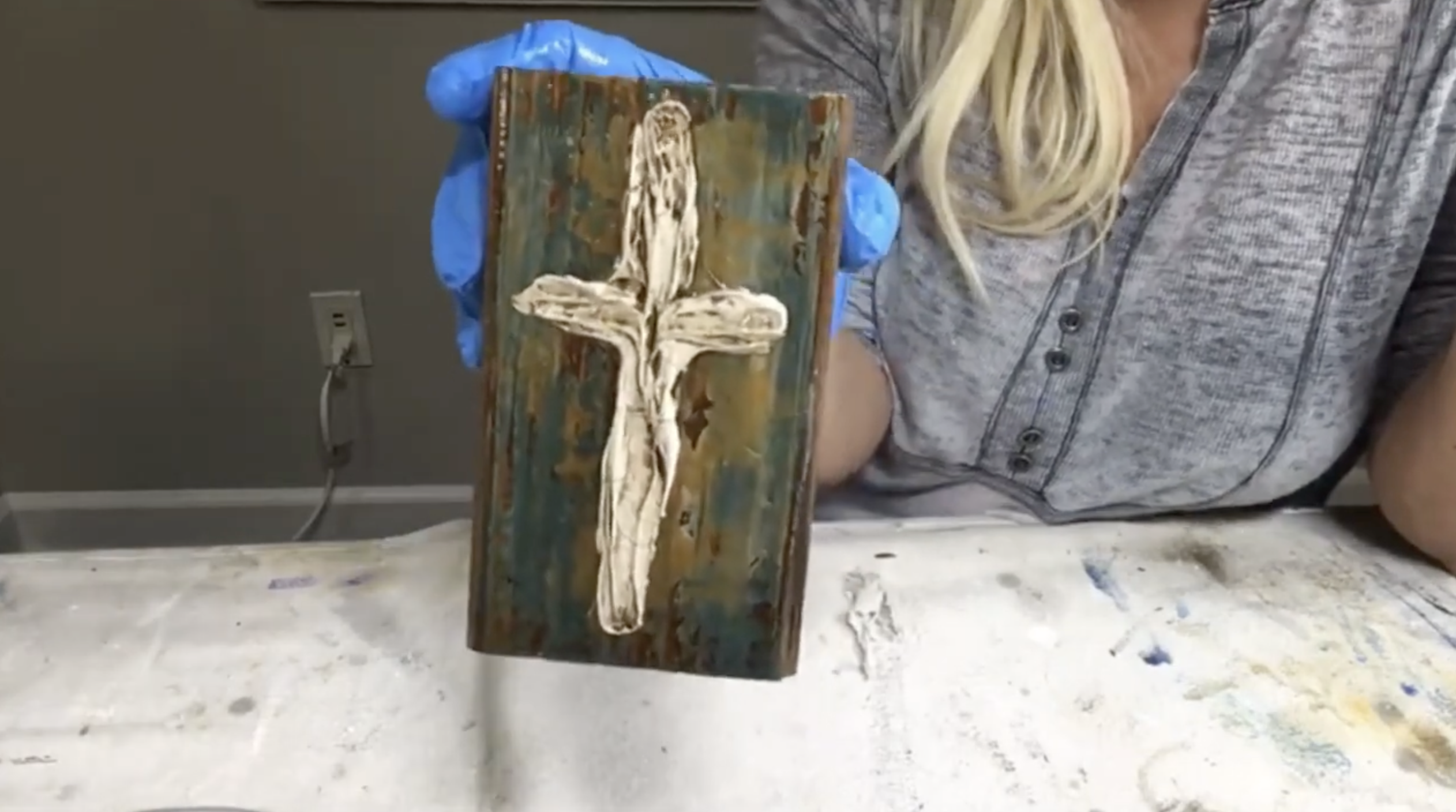
Glass Chip Cross ✝️

cross easter Mar 31, 2026
 

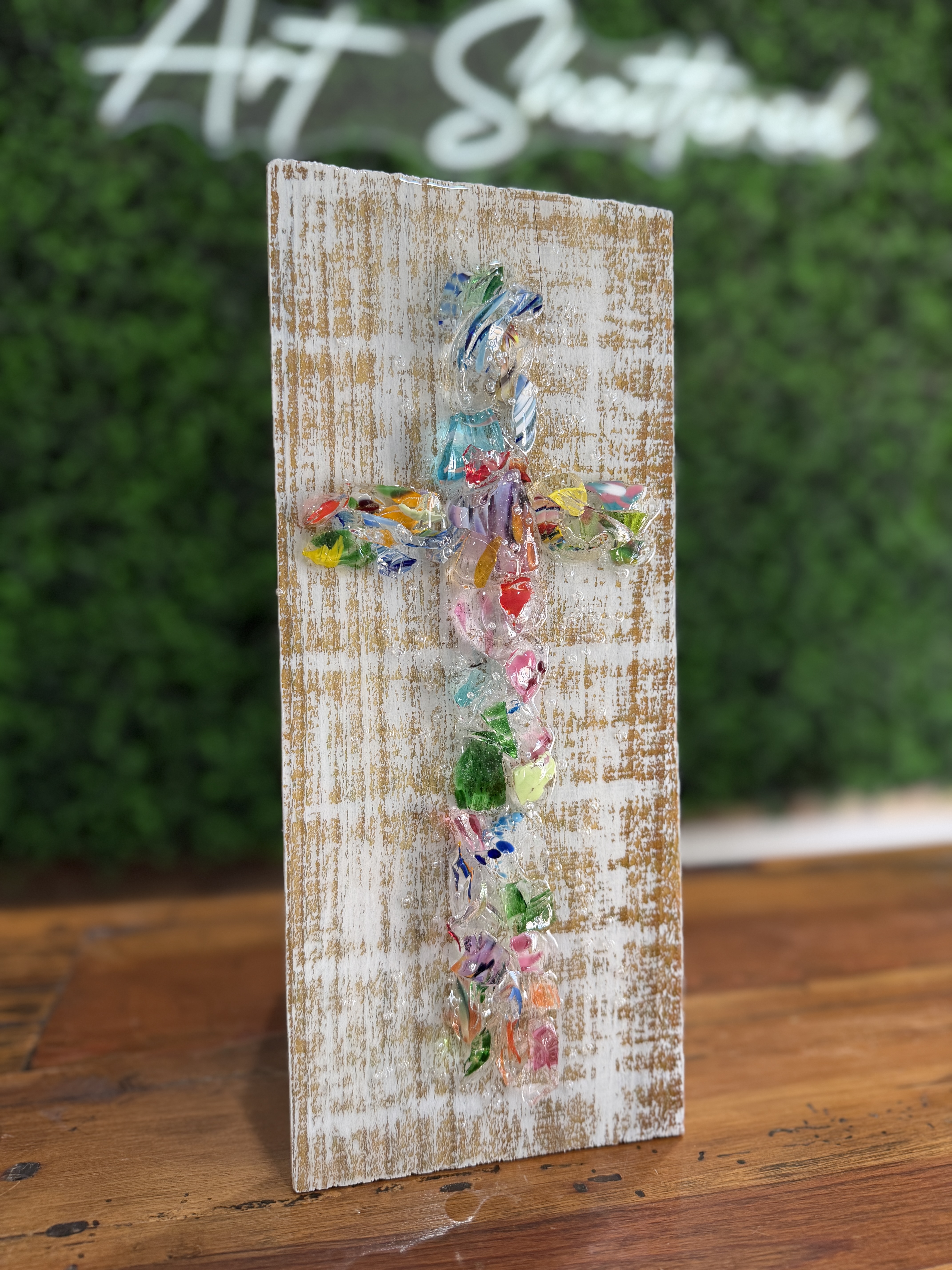
If you have some scrap wood lying around, this is the perfect rustic art piece to create for the Easter season! Today we’re turning a simple, scrappy fence post into a beautiful glass cross wall art piece using paint, glass chips, and resin. It’s rustic, colorful, meaningful, and honestly… way easier than it looks. This is a perfect beginner-friendly mixed media project, and it’s a great way to use up glass scraps or try something new with resin art.

Step 1: Prep Your Wood Surface

Start by sanding your wood to smooth out any rough edges or splinters. Since wood is porous, sealing it first is an important step you don’t want to skip. Apply two coats of a clear sealer, allowing each coat to dry completely before moving on.

This step helps prevent your paint and resin from soaking unevenly into the wood, giving you a more polished and durable final piece.

Step 2: Create a Rustic Whitewashed Background

Once your board is prepped, it’s time to add that soft, weathered background. Usi...

Continue Reading...

Hydrangea Bucket 🌸

flower Mar 25, 2026
 

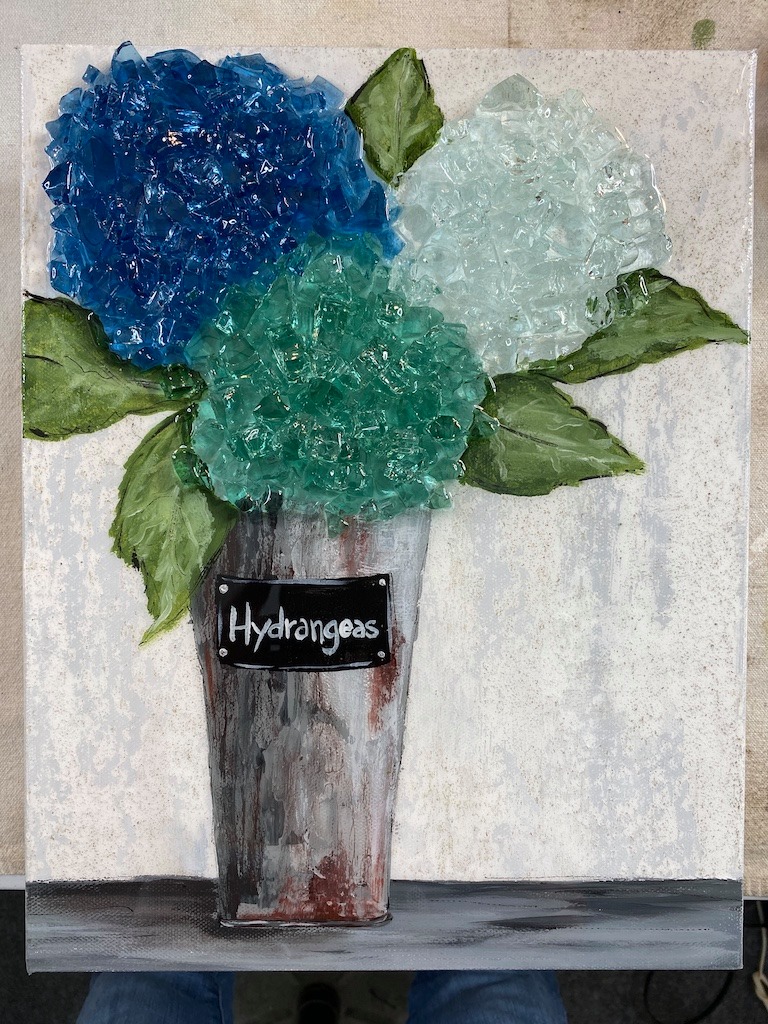
If you love hydrangeas and textured mixed media art, this project is such a fun one to create. This piece combines a softly textured background, a painted metal flower bucket, layered leaves, and chunky glass hydrangea blooms. For this project, I worked on an 11x14 canvas and built the piece in layers. The result is a hydrangea arrangement that feels full, bright, and beautifully dimensional!


Step 1: Paint the Background

Start with your 11x14 canvas and brush on a thin coat of white acrylic paint. This is not meant to be a fully finished base coat. It simply softens the brightness of the raw canvas and helps mute the gray background color that comes next. While that white is still slightly wet, brush in a soft light gray over the canvas. Blend it out so you end up with a subtle gray-and-white base rather than a flat, solid coat of gray. Once the canvas is covered, dry it completely with a heat gun or blow dryer. 

Use painter’s tape to mask off the bottom section of the canvas w...

Continue Reading...

Gnome Bunnies 🐰

easter gnome Mar 18, 2026
 

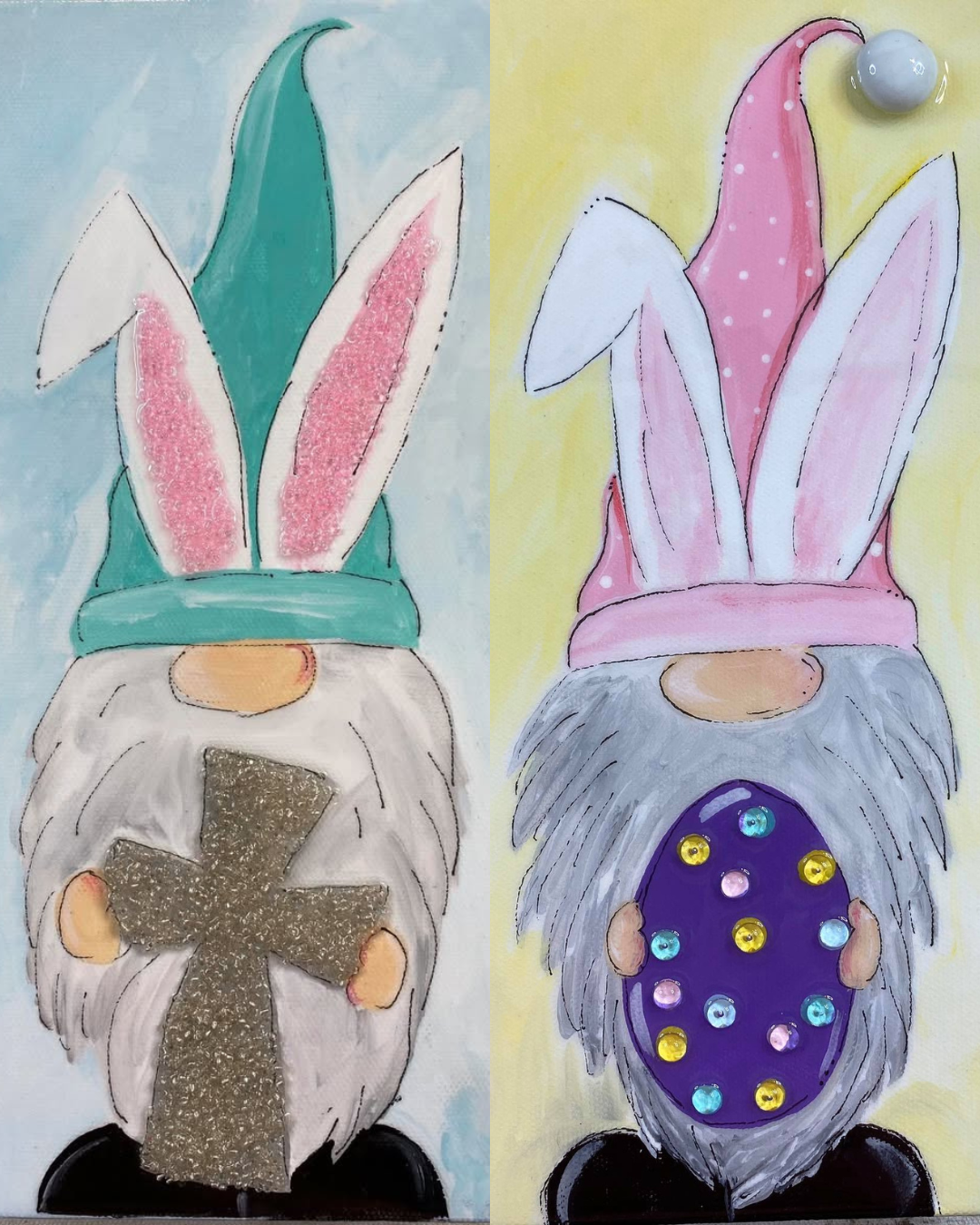
If you’re in the mood for something whimsical, springy, and just plain adorable, this Easter bunny gnome project is such a fun one to make. In this tutorial, you’ll paint a sweet little gnome with bunny ears, a fluffy beard, and either a beaded cross or a dotted Easter egg, then finish it off with resin for that glossy, polished look. 

One of the best things about this project is how easy it is to customize. You can switch up the hat color, choose whether your gnome holds a cross or an Easter egg, and decide how much sparkle you want to add with beads and embellishments. The basic process stays the same, so once you make one, you may just want to make a whole lineup of bunny gnomes!


Step 1: Trace the Bunny Gnome Design

Start by tracing your bunny gnome onto the canvas. Make sure the outline is light but still visible enough for painting. If you are using a tracer and graphite paper, transfer the design before you begin painting so all of your features are placed correctly.

The...

Continue Reading...

Hummingbird 🌸

bird flower spring Mar 11, 2026
 

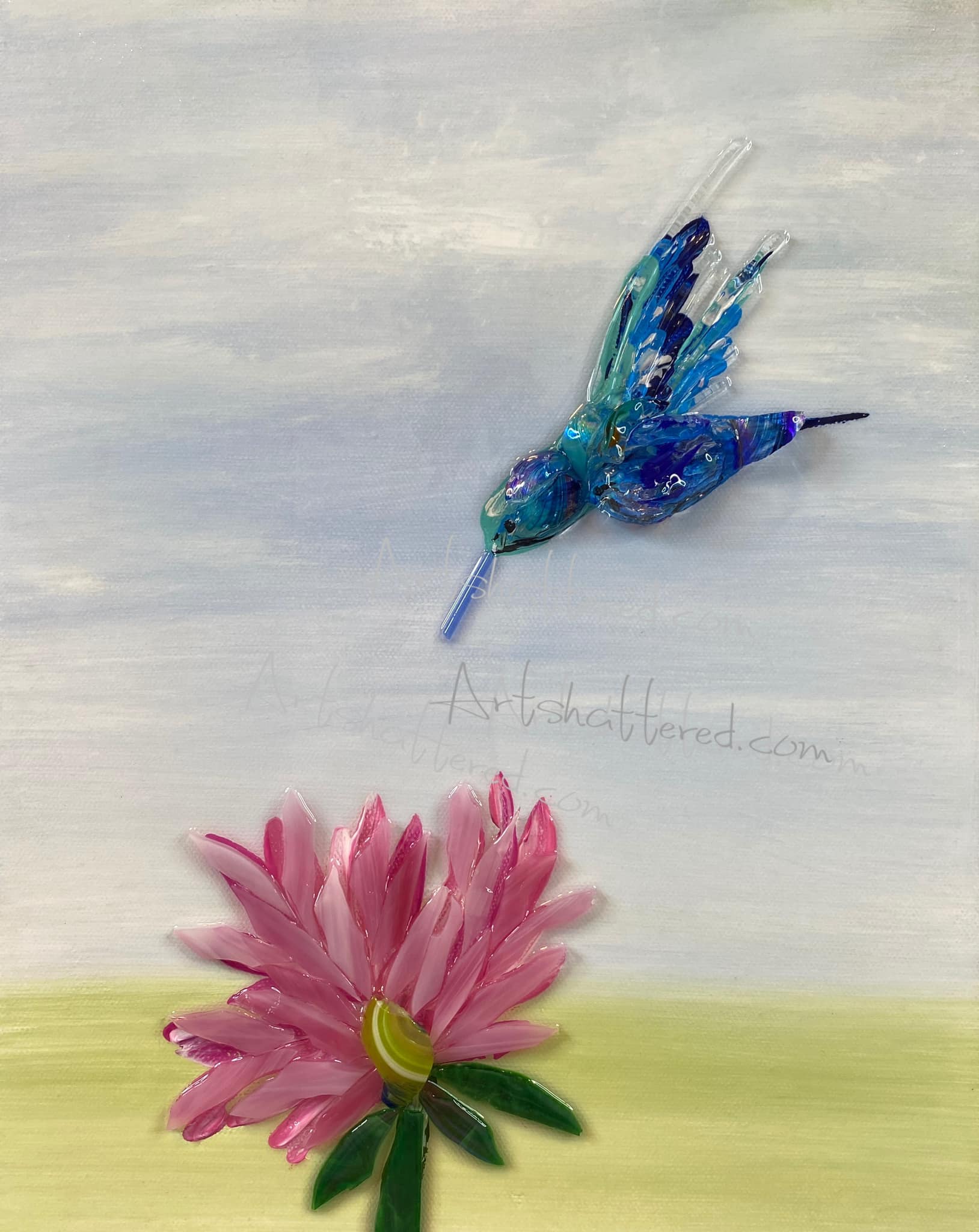
If you’re in the mood to create something soft, pretty, and full of movement, this hummingbird project is such a fun one to make! This project is a great example of how painted details and glass can work together beautifully. You do not need to overpaint every single detail, because the glass does a lot of the visual work in the finished piece. That makes this a really approachable mixed media project, even if birds feel a little intimidating at first!

Step 1: Paint the Background and Sketch

Paint your background with a light green in the bottom portion of the canvas and some blue and white on the top portion of the canvas to create a grass and sky compositon. Let dry.

Begin by lightly sketching your hummingbird onto the canvas with watercolor pencils. You could also use a tracer. The sketch does not need to be overly detailed, but it should give you the general shape of the head, body, wings, tail, and beak placement. Add a simple flower near the bottom of the canvas as well. Thi...

Continue Reading...

Button Bunny 🐇

bunny easter Mar 04, 2026
 

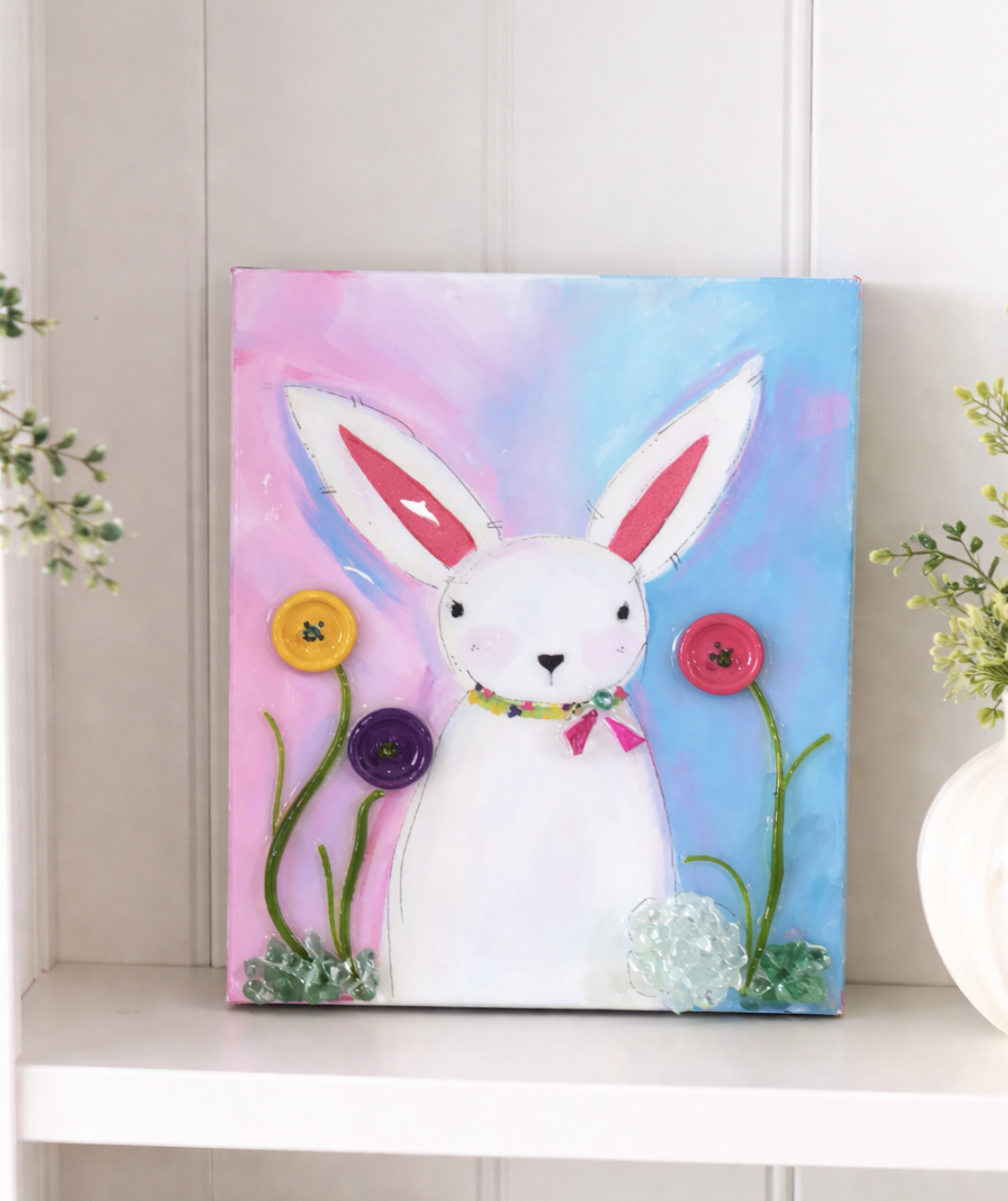
Today we’re making the CUTEST little bunny (aka Babs) on an 8x10 canvas with a playful pink-and-blue background, button flowers, curly vitrigraph stems, and glass and resin sparkle. This is one of those projects that’s whimsical on purpose, and no perfection is required.

Step 1: Trace the Bunny

Start by placing your bunny tracer on the blank canvas and shifting it until the spacing feels balanced, leaving room for two button flowers on one side and one on the other. Tape the tracer down so it can’t wiggle while you trace. Slide your graphite paper underneath and trace the bunny’s head, body, and both ear shapes, including the inner ear sections, but skip tracing the tail because you’ll be creating that with glass later.

Step 2: Paint the Loose, Blended Background (Blue to Pink)

Start by putting white down first on one side of the canvas, working loosely around the bunny outline. Blend Mermaid Blue into that white near the edge, then fade it inward by picking up more whi

...
Continue Reading...

Bunny with Egg 🐰

bunny easter Feb 25, 2026
 

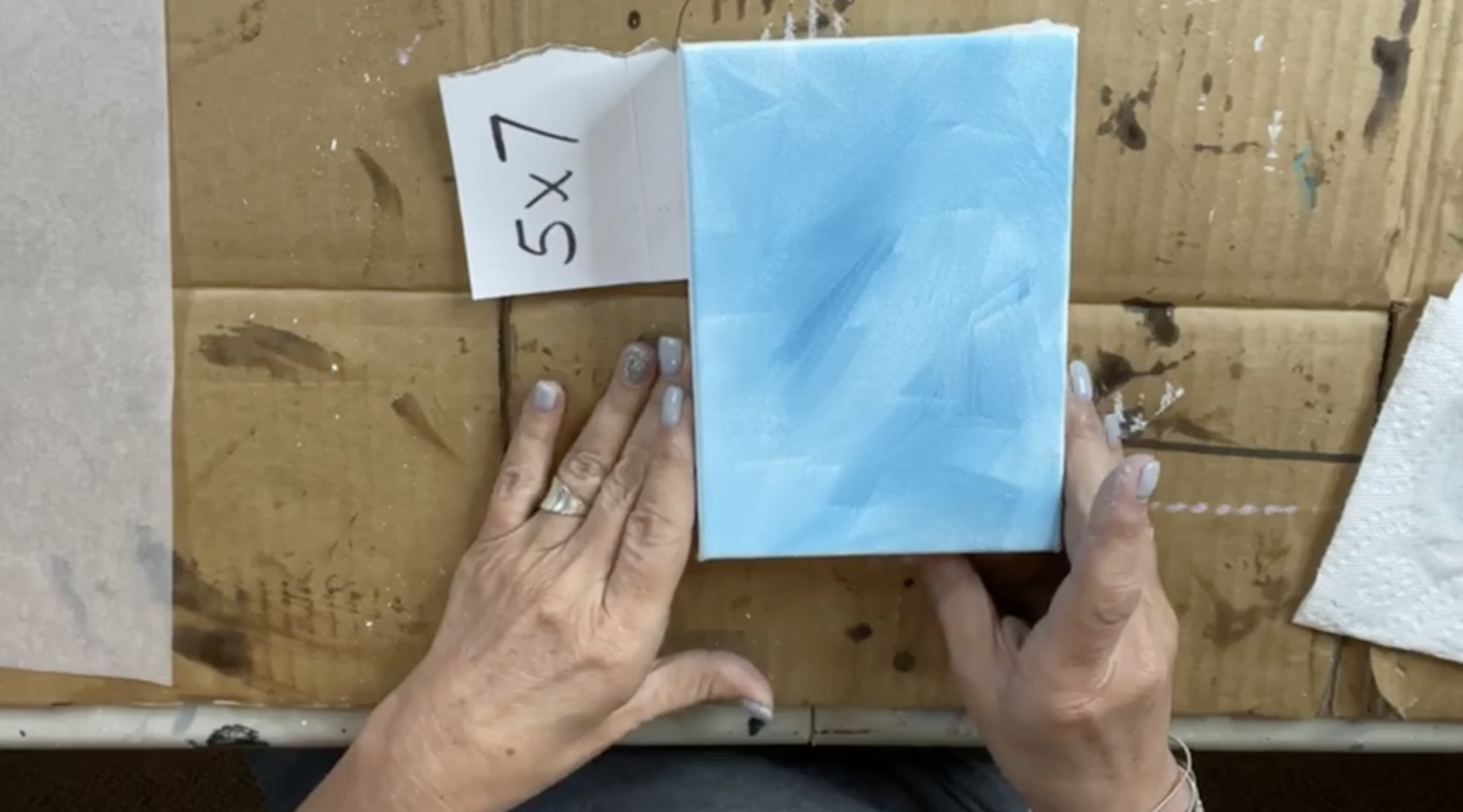
This adorable little bunny is dressed up for Easter with a colorful polka-dot egg, dimensional bubbles, and a sparkly glass tail. He’s painted on a thick 5x7 canvas, which makes him the perfect little shelf sitter. This project is playful, beginner-friendly, and a wonderful way to experiment with paint, pen work, glass, and resin all in one piece. Let’s walk through it together.

Step 1: Paint the Background

Begin by covering your entire canvas with white acrylic paint using a 1" flat brush. Once the surface is coated, lightly dip just the tips of your brush into Mermaid Blue and loosely blend it across the canvas using soft X-strokes. Dry the canvas completely before moving on to the next step.

Step 2: Transfer the Bunny Design

Once the background is dry and cool to the touch, place your transfer paper underneath the bunny tracer and trace the design onto the canvas. You can skip tracing the whiskers and tail since those can easily be freehanded later. Be sure your canvas is fu...

Continue Reading...

Plaster Cross ✝️

antique cross easter Feb 18, 2026
 

Today we’re creating a beautiful textured cross shelf-sitter featuring layered acrylic paint, metallic gold accents, modeling paste (or Venetian plaster), antiquing glaze, and a glossy resin finish. This project is simple, affordable, and completely customizable. No two crosses will ever look the same, and that variation is what makes them so special!

Step 1: Prep & Stain Your Wood

Start with your wood block and apply a dark walnut gel stain if you want a rich base tone. Work in small sections by brushing the stain on with a chip brush and wiping it off immediately with an old t-shirt or cloth. This keeps the finish even and prevents blotching. Once fully dry, cut your board into blocks if needed. The stained wood peeking through later layers adds warmth and character to the finished piece.

Step 2: Add Your Base Color (Palette Knife Technique)

Using a palette knife, apply your main color directly onto the wood surface. For this example, I’m using Ash gray, but the same process ap...

Continue Reading...

Gold Leaf Abstract 💛

abstract Feb 11, 2026
 

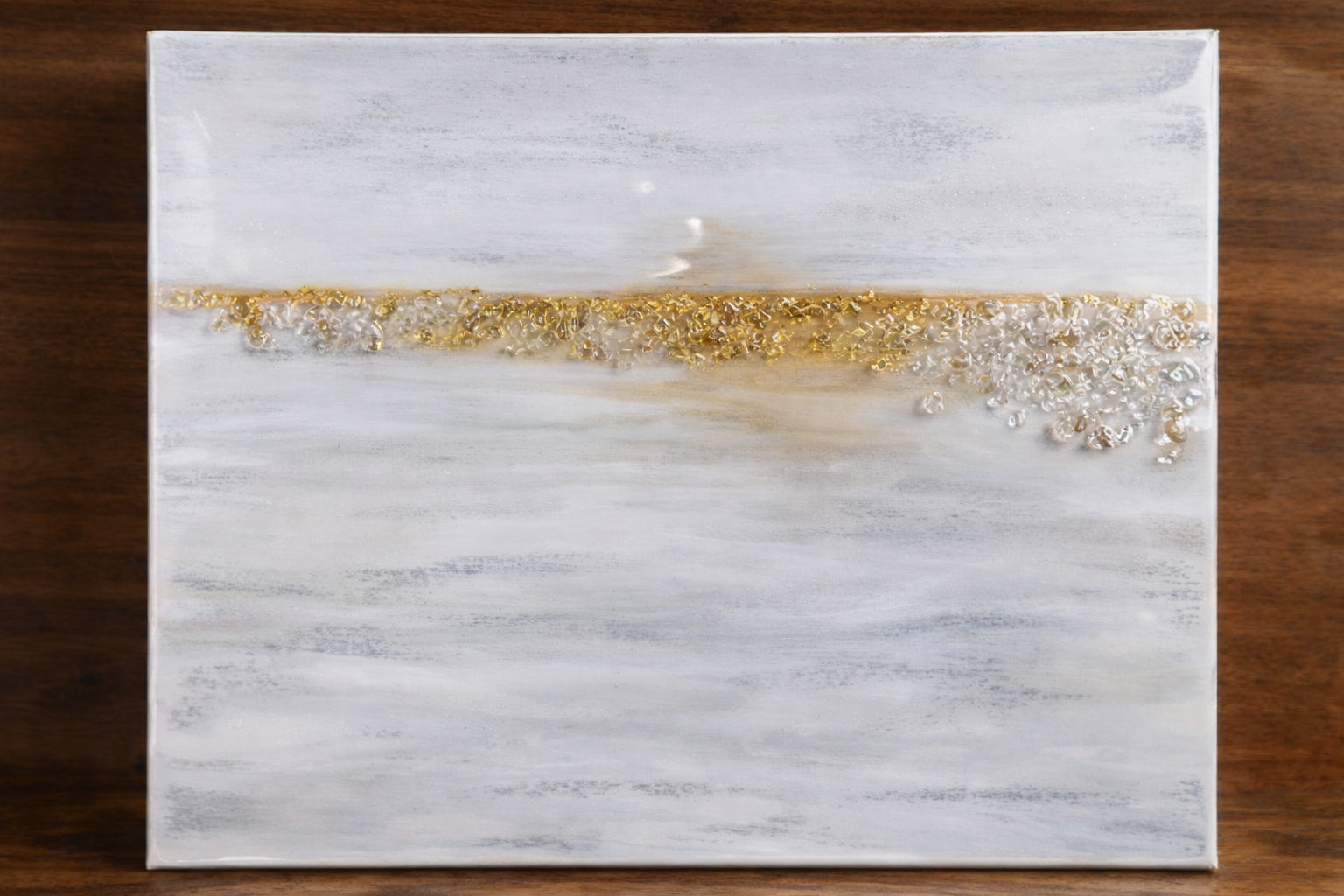
This project is simple, calming, and wildly forgiving - soft gray and smoky blue undercoats, dreamy dry-brushed whites, and a delicate “horizon line” made from gold leaf and tiny gold floral glass. The finished look is modern, minimal, and perfect for a bathroom, entryway, or anywhere you want a little quiet sparkle.

This design is basically two zones: a top section and a bottom section, with a “horizon” line running across where they meet. Lightly mark where you want that line - about one-third down from the top is a great starting point. Don’t stress about measuring perfectly; this piece looks best when it feels organic.

Step 1: Paint the Undercoat (Gray Top, Blue Bottom)

Start with your dark gray (Anita’s Rainy Day) and paint the top portion down to your pencil mark. Don’t worry about painting the edges perfectly at this stage, because you’ll be dry brushing later and most of the undercoat will peek through rather than dominate.

Without cleaning the brush too much, offload exc...

Continue Reading...

Blue Ombre Heart 💙

heart valentine's day Feb 04, 2026
 

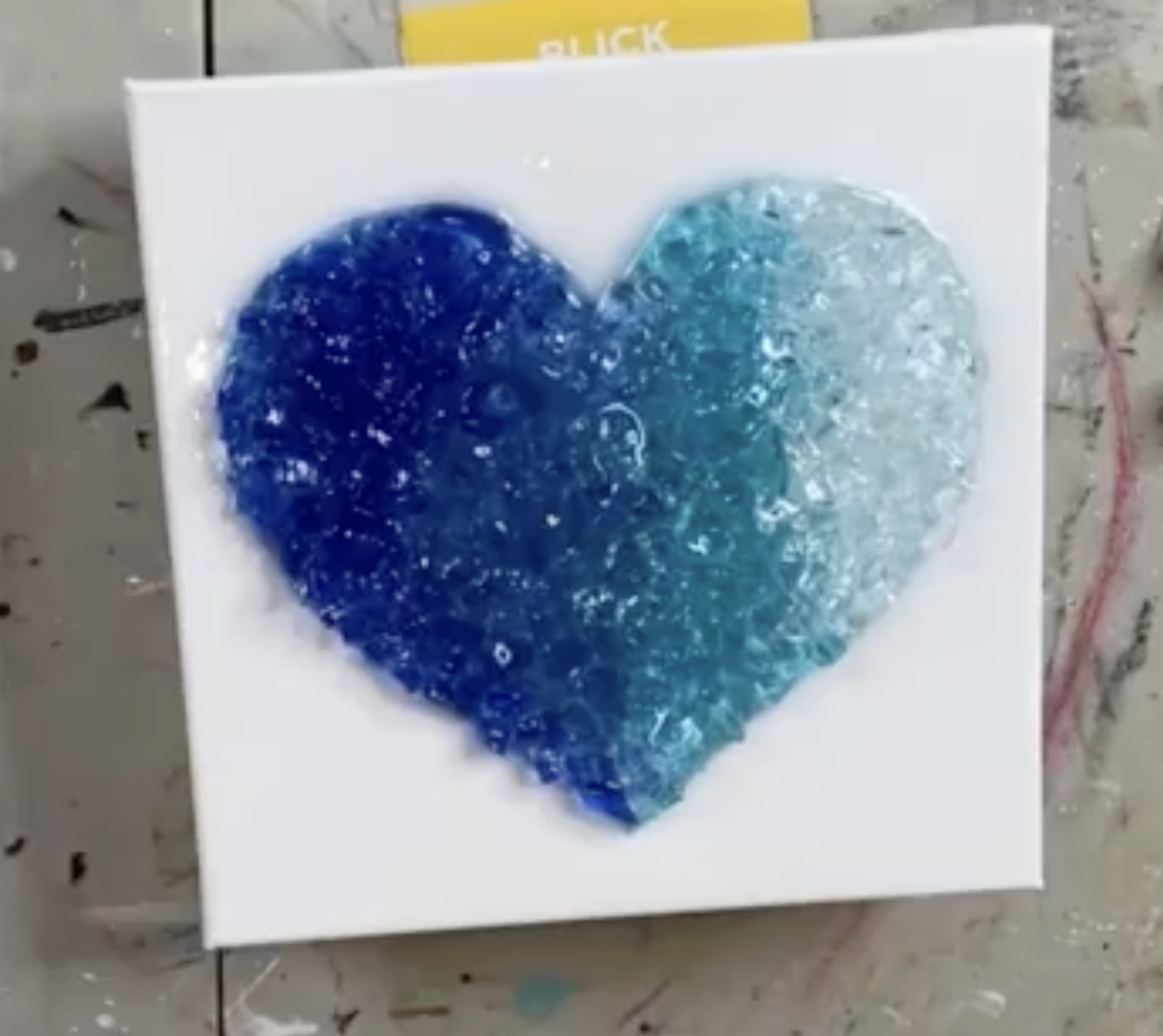
This quick little project is one of those pieces that looks way more advanced when it’s finished. You’ll lightly trace a heart onto an 8x8 canvas, paint a simple two-color ombre undercoat, then build a dimensional glass gradient using four shades: Cobalt → Pacific Blue → Caribbean Blue → Clear. Finish it off with a thin resin coat, pop bubbles, and you’ve got a sparkly, textured heart that’s perfect for Valentine's Day or any time of the year.

Step 1: Prep Your Canvas and Heart Template

Start with your 8x8 canvas and make sure the surface is clean and dry. If your canvas has any scuffs, a quick coat of white paint over the entire canvas helps freshen it up and gives you a clean base. Next, print a heart template (Pinterest is the easiest source - search “free heart template” and print one you like). Place the template on the canvas and trace the heart.

Step 2: Paint a Soft Ombre Undercoat Inside the Heart

This paint step is mainly here to hide tracer lines and give the glass a pr...

Continue Reading...

Red Heart Door Hanger ❤️

heart valentine's day Jan 28, 2026
 

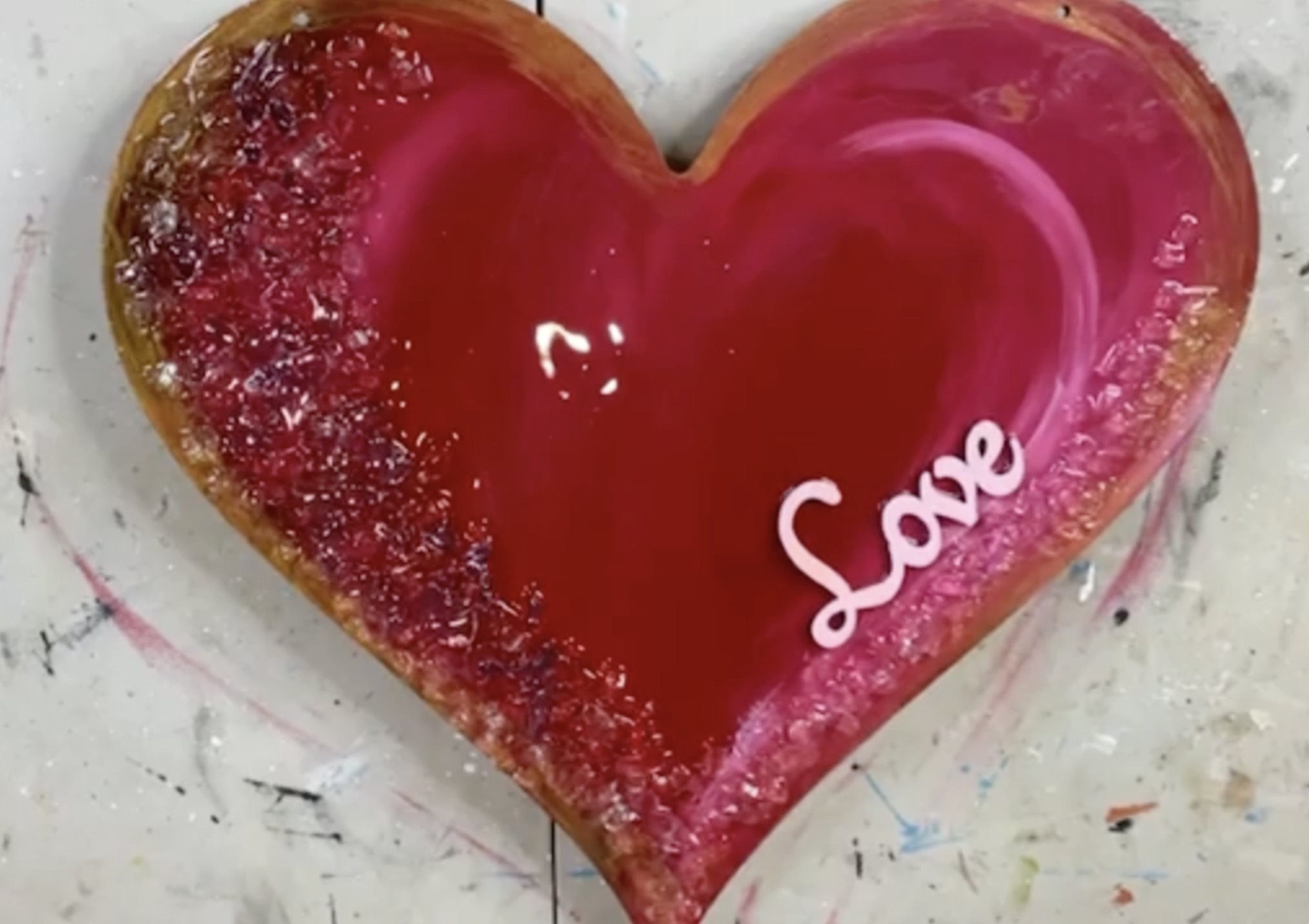
This bold red resin heart is one of those projects that looks fancy but is actually very approachable, even if you’re newer to resin and glass art. Using an inexpensive wooden heart base, a little paint, crushed glass, and resin, you’ll create a dimensional Valentine’s piece that’s sweet and full of texture. It’s perfect for hanging on a door, gifting for Valentine’s Day, or adding a pop of love to your studio or home.

Step 1: Prep the Wooden Heart

Begin by removing the ribbon from the wooden heart so it doesn’t get paint or resin on it. Set it aside - you’ll add it back once everything is fully cured. Because the heart is made from porous fiberboard, it will absorb paint quickly, especially on the first coat.

If the edges of your heart feel rough, this is a good time to lightly sand them before painting.

Step 2: Paint the Heart

Using a large brush, apply a full coat of Cherry Red acrylic paint to the front of the heart. Don’t worry if the paint seems to disappear - this board s...

Continue Reading...
Close

50% Complete

Two Step

Lorem ipsum dolor sit amet, consectetur adipiscing elit, sed do eiusmod tempor incididunt ut labore et dolore magna aliqua.